
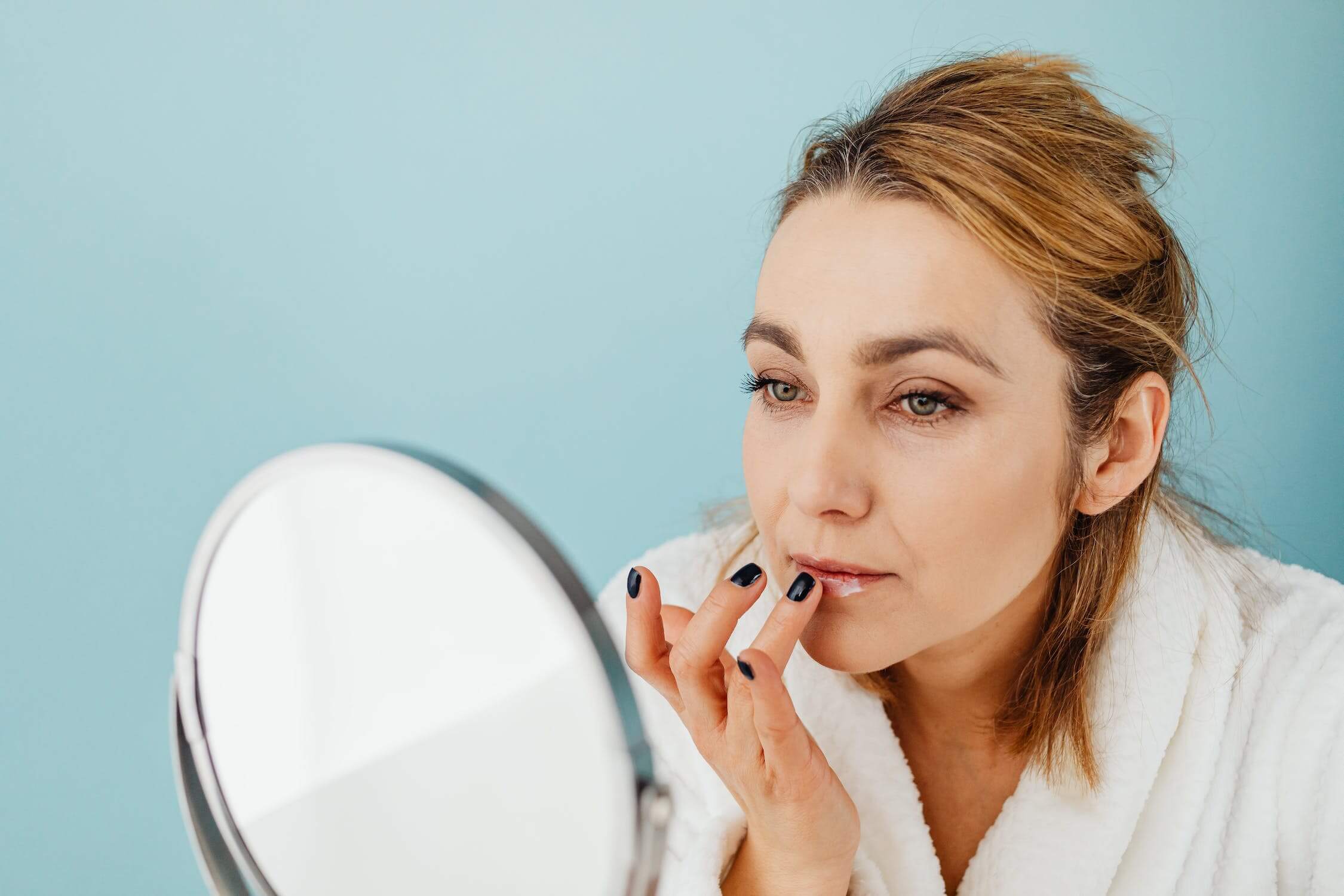
You’ve probably seen the videos. A woman drags her finger across her lips, rubs them together, even wipes them with a napkin — and the lipstick. Does. Not. Move. It looks like witchcraft.Then a friend, a coworker, or some enthusiastic stranger in your DMs tells you it’s called LipSense and you need it in your life.
The kit costs around $75. You hesitate. And then you do what any sensible person does — you Google “is LipSense terrible for your lips?”Good instinct. Let’s actually answer that.This isn’t a distributor review. No affiliate links, no sales pitch. Just a straightforward breakdown of what’s in it, what it does to your lips, who it works for, and who should probably stay away.
What Is LipSense, Exactly?

LipSense is made by a company called SeneGence and sold through a multi-level marketing (MLM) network. That last part matters — because it means most of the people reviewing it online have a financial reason to make it sound amazing. Keep that in mind as you read reviews.The product itself is a liquid lip color that’s genuinely impressive in terms of staying power. It’s waterproof, smudge-proof, and claims to last anywhere from 4 to 18 hours without touching up. It’s also wax-free, vegan, cruelty-free, and gluten-free, which ticks a lot of boxes for conscious beauty shoppers.But here’s the thing: how it works is where it gets complicated.
What’s Actually in LipSense? Let’s Talk Ingredients
The staying power isn’t magic. It comes from a very specific set of ingredients — and a few of them deserve a closer look.
Alcohol Denat — The One That Burns
This is the very first ingredient on the list. In cosmetics, ingredients are listed in order of concentration, so Alcohol Denat is in there in a significant amount.It serves a real purpose: it’s an antimicrobial agent that prevents bacteria from growing in the tube, and it’s what helps the color bond to your lips and stay put. It also evaporates quickly, which is part of what creates that “dry, matte” finish.The catch? Alcohol is drying. Especially on lips, which have some of the thinnest skin on your body. Some cosmetic scientists argue that repeated, daily exposure to high concentrations of denatured alcohol gradually breaks down the lip’s natural moisture barrier, leading to drier lips over time. The science is still debated, but the real-world user complaints aren’t — they’re everywhere.That tingling or burning sensation you feel when you apply it? That’s the alcohol hitting any dry or cracked areas on your lips. For most people it fades in 5 to 10 seconds. For others, it’s intense enough to be a red flag.
Acrylates/Octylacrylamide Copolymer — The “Paint” Ingredient
This is the ingredient that makes people panic when they look it up. “Acrylates” sounds like acrylic paint. And honestly, that reaction isn’t completely irrational — it is used in paints and nail polishes.But here’s some context: acrylate copolymers form a thin, flexible film on whatever surface they’re applied to. That’s how LipSense stays on for hours. The same type of polymer is found in hairspray, sunscreen, and plenty of other everyday cosmetics. According to the Cosmetic Ingredient Review (an independent safety panel), acrylate copolymers at cosmetic concentrations are considered safe for use — the polymers themselves show very low toxicity. The main concern historically has been residual monomers from the manufacturing process, but the levels in finished cosmetic products are well within safe limits.Is it a weird ingredient for a lip product? Slightly. Is it dangerous? Probably not at the amounts used here.
Propylene Glycol — The Controversial Humectant
You’ll sometimes see this ingredient causing alarm because it’s also found in antifreeze and industrial solvents. That sounds scary, but it’s a bit like saying “water is used in industrial cleaning products, therefore don’t drink water.” The context matters.At cosmetic concentrations, propylene glycol is primarily a humectant — it draws moisture. The concern is legitimate only for people with sensitive skin, where it can occasionally trigger contact dermatitis. Most users are fine. A small percentage isn’t.
Parfum / Fragrance — The Ingredient Nobody Talks About
This one actually concerns me more than the others. “Parfum” or “fragrance” is a catch-all term on ingredient labels that can legally represent anywhere from 30 to 200 different chemicals — and companies aren’t required to disclose what those chemicals are.For most people, it’s just a smell. But for people who are pregnant, have fragrance allergies, or have reactive skin, this is a real blind spot. You have no way of knowing what’s in it without contacting the company directly.
The Botanical Extracts — The Good Stuff
LipSense does contain some genuinely nice ingredients: St. John’s Wort extract, Tree Peony, and Linden (Tilia cordata). These have legitimate soothing, antioxidant, and antimicrobial properties.Quick note though: St. John’s Wort is known to interfere with certain medications, including oral contraceptives. Absorption through the lips is minimal, but if you’re a daily user on hormonal birth control, it’s worth being aware of.
Colorants and Lead
One question that comes up a lot: does LipSense contain lead? The answer is no, not intentionally. Colorants in lip products are tightly regulated by the FDA to limit heavy metal content. A 2011 FDA study did find trace amounts of lead in hundreds of lip products, but concluded the levels posed no health hazard. LipSense falls under that same regulatory framework.
Real Side Effects: What Users Actually Experience
Let’s stop dancing around it. Here’s what real people report, beyond what the distributors tell you.
Burning That’s More Than a Tingle

The brand describes it as a brief 5–10 second tingle. And for many people, that’s accurate. But for users with dry, cracked, or sensitive lips, it can be genuinely painful. Some women have described it as feeling like a chemical burn. A few report having the reaction even after their lips appear to be in good condition.If it burns more than mildly, that’s your skin telling you something. Don’t push through it in hopes of “getting used to it.”
Severely Dry Lips

This is the most common complaint. LipSense distributors often explain away extreme dryness as a “sluffing process” — a 2 to 3 week period where your lips are supposedly purging old waxes and toxins from other products.There’s a grain of truth here: alcohol does exfoliate, and it can remove buildup from previous waxy lip products. But the dramatic “purge narrative” is mostly marketing. What’s actually happening for many users is that the high alcohol content is stripping their lips faster than the moisturizing gloss can compensate.
Allergic Reactions
This one’s serious. A notable number of users report itching, redness outside the lip line, hives, or full-blown allergic reactions — sometimes from the color itself, sometimes from the “Oops!” remover. Fever blister outbreaks are mentioned repeatedly, and for people who are HSV-1 positive (cold sore prone), this makes sense — alcohol and acidic ingredients can trigger an outbreak.If you already get cold sores regularly, approach this product with real caution.
The Removal Problem
Getting LipSense off is its own ordeal. Even with the brand’s remover, it often takes multiple applications and a lot of rubbing. That physical friction alone can damage already-stressed lips. Some users report their lips looking and feeling worse after removal than they did after a full day of wear.
So Is LipSense Actually Terrible for Your Lips?
Here’s the honest verdict: it depends entirely on your lip type and how you use it.That’s not a cop-out. It’s genuinely a product that works beautifully for some people and causes real problems for others.LipSense is probably fine for you if:
- Your lips are naturally healthy, moisturized, and non-reactive
- You use it occasionally rather than every single day
- You always use it with the moisturizing gloss as directed
- You don’t have a history of cold sores, eczema, or skin sensitivities
- You’re not pregnant or on medications that interact with St. John’s Wort
LipSense is likely a problem for you if:
- Your lips are already dry, chapped, or cracked
- You have sensitive or reactive skin
- You’re prone to cold sores or fever blisters
- You have fragrance allergies
- You’re pregnant or breastfeeding
- You plan to use it every single day, long-term
The “terrible” label is too simple. The “miracle lip color” label is also too simple. The truth is somewhere in the middle, and it’s personal.
How to Use LipSense Safely (If You Still Want to Try It)

If you’ve weighed the above and still want to give it a shot, here’s how to minimize the downsides:
1. Prep your lips first. Exfoliate gently the night before with a sugar scrub and apply a nourishing balm. Don’t apply LipSense over dry, cracked lips.
2. Patch test it. Apply a tiny amount to the inside of your arm 24 hours before putting it on your lips. If you react there, you’ll react on your lips.
3. Never skip the gloss. The gloss isn’t optional — it’s what seals in the color and counteracts the drying alcohol. Using the color alone and skipping the topcoat is asking for dry, damaged lips.
4. Don’t use it every day. Give your lips recovery time, especially in the first few weeks. Every other day, or even just for special occasions, is a smarter approach than daily wear.
5. Remove it gently. Coconut oil and olive oil work well and are significantly gentler than the brand’s “Oops!” remover for many users. Let the oil sit for 30 seconds before wiping — don’t scrub.
6. Listen to your lips. If they’re getting drier, more sensitive, or you’re feeling burning that doesn’t settle quickly — stop using it. No lipstick is worth that.
LipSense vs. Regular Lipstick: Which Is Actually Worse?

Here’s a quick side-by-side, because this comparison comes up constantly:
| Factor | LipSense | Regular Lipstick |
|---|---|---|
| Alcohol content | High (first ingredient) | Usually none |
| Drying potential | High | Low to moderate |
| Wear time | 4–18 hours | 2–6 hours |
| Ease of removal | Difficult | Easy |
| Lead-free | Yes | Not always |
| Price to start | ~$75 (kit) | $5–$40 |
| Fragrance risk | Yes (undisclosed) | Varies |
| Vegan/cruelty-free | Yes | Varies |
Regular lipstick wins on gentleness and ease. LipSense wins on longevity and some safety certifications. Neither is perfect.
Common Mistakes That Make LipSense Worse

Most bad LipSense experiences can be traced back to a few avoidable errors:
Applying over lip balm or other products. LipSense bonds directly to your lips. If you have product residue on them — especially waxy residue from a regular lip balm — it’ll bond to that instead, peel off within hours, and look terrible. Clean, bare lips only.
Skipping the gloss. Already said this, but it’s worth repeating. The gloss is half the product. Without it, the alcohol has nowhere to go except into making your lips drier.
Applying to damaged lips. If your lips are cracked or peeling, the alcohol will make contact with open skin and it will hurt. It can also delay healing.
Trusting distributor science. The claim that LipSense “molecularly bonds to your lips” sounds impressive. It’s also essentially meaningless — all bonding is molecular bonding. What actually keeps it on is a polymer film-forming system, which is clever chemistry, but not magic. When a distributor’s explanation of the product contradicts basic science, be appropriately skeptical.
Healthier Alternatives for Long-Lasting Color

If the LipSense ingredient list puts you off, you’re not stuck with products that fade in two hours. There are genuinely good options:
- Lip stains (like those from Burt’s Bees or ILIA) that use plant-based dyes without high alcohol concentrations
- Transfer-proof formulas from brands like Fenty or NYX that use silicone-based polymers rather than harsh alcohol as their base
- Tinted lip balms with staying power — not as intense in color, but far kinder to lip health over time
- Look for products rated low on the EWG Skin Deep database if ingredient safety is a priority for you
Frequently Asked Questions
Why does LipSense burn when I put it on?
The Alcohol Denat in the formula contacts any dry or broken areas on your lips and causes a burning sensation — similar to putting rubbing alcohol on a cut. For healthy, smooth lips it usually fades in seconds. For sensitive or damaged lips, it can be genuinely painful and is a sign you should stop.
Can LipSense cause cold sores?
It can trigger an outbreak in people who are already prone to them. The alcohol and other active components in the formula can irritate the lip area enough to activate the HSV-1 virus if it’s dormant in your system. If you get cold sores regularly, this is a real risk.
Is it safe to use LipSense every day?
Short-term, probably fine for healthy lips. Long-term daily use is harder to recommend, given the high alcohol content and what we know about repeated alcohol exposure on delicate lip skin. Giving your lips regular breaks is the smarter move.
Is LipSense safe during pregnancy?
The honest answer is: we don’t know for sure, and that’s reason enough to be cautious. The undisclosed fragrance formula and the presence of St. John’s Wort are both flags worth discussing with your doctor before using this product while pregnant.
Can I remove it with coconut oil?
Yes, and many users actually prefer it to the brand’s remover. Apply coconut oil or olive oil, let it sit for 30 seconds to break down the polymer film, then gently wipe off. Much gentler than repeated rubbing with the Oops! remover.
Does LipSense contain lead?
Not intentionally, no. Colorants in lip products are regulated by the FDA and tested for heavy metals. LipSense’s marketing around being lead-free is accurate — though it’s worth noting that essentially all reputable lip products today meet the same standard.
What is the “sluffing process” distributors talk about?
It refers to the first few weeks of use where your lips may look worse before they look better. There’s a real mechanism behind it — alcohol does exfoliate and remove old product buildup — but the extent to which distributors dramatize this as a “detox” or “purge” is largely a sales narrative. If your lips are getting dramatically worse after two weeks, that’s not a purge. That’s the product not working for your lip type.
The Bottom Line

LipSense is a genuinely innovative product. The staying power is real, the formula is clever, and for the right person, it works exactly as advertised.
But it’s not for everyone. The high alcohol content, the film-forming polymers, the undisclosed fragrance, and the aggressive removal process make it a product that requires healthy lips, occasional use, and a bit of extra care. If you go in informed and prepared, you can probably use it without issue. If you go in expecting a miracle with no trade-offs, you’ll likely end up with sore, dry lips and a $75 dent in your wallet wondering why nobody told you the truth.
Read More: Kiss Chapped Lips Goodbye for Good With These Tips